Rubbish clearance quotes Hoddesdon real cost guide
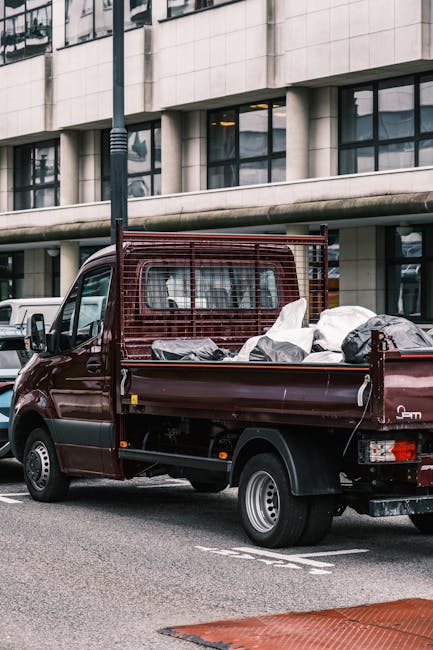
If you're trying to make sense of rubbish clearance quotes in Hoddesdon, you're probably asking the same thing most people ask first: what is the real cost, and why can two quotes for the same pile of junk look wildly different? Fair question. In practice, the price depends on volume, access, labour, waste type, and how quickly the job needs doing. This guide breaks it down in plain English so you can compare quotes properly, avoid nasty surprises, and choose the right clearance option with confidence.
Whether you're clearing a house after a move, emptying a garage that's somehow become a storage unit for old bike parts and mystery boxes, or getting rid of builders' waste after a tidy-up, the same basic pricing logic applies. Let's make it clear, practical, and local to Hoddesdon.
Why Rubbish clearance quotes Hoddesdon real cost guide Matters
The quote you receive is not just a number; it's a signal of how the company is estimating the job. And that matters, because a rubbish clearance can be priced very differently depending on what's actually involved once a team turns up. A small amount of mixed household waste on a driveway is one thing. A full loft clearance on a top floor with a narrow stairwell and awkward parking is something else entirely.
In Hoddesdon, as in much of Hertfordshire, customers often compare clearance services alongside skip hire, self-load options, and council collection alternatives. The cheapest headline price is rarely the cheapest end result. If a quote leaves out labour, fuel, loading time, or disposal fees, you may end up paying more later. That's the bit people regret.
Real cost matters because it helps you judge value, not just price. You want to know whether the quote covers the time on site, the team size, transport, legal disposal, and any extra effort needed for stairs, heavy items, or restricted access. A clear quote also tells you a lot about the provider's professionalism. If they are careful with pricing, they are usually careful with the clearance itself too.
Practical takeaway: the best quote is not always the lowest one. It is the one that explains what's included, what might change, and how the work will be carried out without hidden add-ons.
How Rubbish clearance quotes Hoddesdon real cost guide Works
A proper clearance quote usually starts with a basic description of the waste. Most companies estimate by volume, labour, access, and waste category. Sometimes they will ask for photos. Sometimes they'll visit. Occasionally, they can quote from a quick phone call if the job is straightforward. That can be fine, as long as the details are accurate.
The real cost is usually shaped by a few core factors:
- Volume of waste: how much space it takes up in the vehicle, often the biggest price driver.
- Weight: dense materials such as bricks, soil, rubble, or tiles can cost more than lightweight mixed rubbish.
- Labour: how long the team needs to load, carry, and sort the items.
- Access: stairs, tight hallways, parking restrictions, and long carries all affect the quote.
- Waste type: some items need special handling, like fridges, paint, or certain electricals.
- Time pressure: same-day or urgent bookings can cost more, especially if the diary is full.
That's the basic model. Straightforward, really, though the devil is in the details. A quote for a single sofa and a few bags is not the same as a quote for a half-cleared loft with broken shelving, old toys, and three heavy filing cabinets that somehow got up there in the first place.
If you are comparing services, it can help to look at the wider context too. For example, a house clearance may be priced differently from a more targeted job such as garage clearance or loft clearance. The scope changes everything.
What a good quote should clearly explain
- what waste is included
- how much labour is covered
- whether VAT is included, where relevant
- how access issues affect the price
- what happens if the load is larger than expected
- how payment is taken and when
If any of that is vague, ask for clarification before you book. It saves awkwardness later. Nobody wants to be negotiating at the kerb with a van full of old cupboards and a half-empty wallet.
Key Benefits and Practical Advantages
Understanding rubbish clearance quotes properly gives you more than cost control. It makes the whole process calmer. You can plan the job, choose the right service, and avoid the very common "I thought that was included" conversation. We've all had one of those, and it's rarely fun.
- Better budgeting: you can compare like for like and avoid surprise costs.
- Faster decisions: once you know what affects price, you can rule out unsuitable options quickly.
- Less stress: a detailed quote reduces uncertainty on the day.
- More suitable service matching: you can choose between full clearance, partial clearance, or item-specific removal.
- Cleaner outcomes: when the job is scoped properly, the team can arrive prepared.
There's also a trust angle. A company willing to explain pricing in plain language usually tends to be easier to deal with all round. That matters whether you are clearing a family home, a rental flat, an office, or garden waste after a weekend of ambitious pruning. One quote, properly explained, can save a lot of back-and-forth.
For many customers, the biggest practical advantage is simple: you know what you are signing up for before anyone starts lifting heavy stuff through the hallway.
Who This Is For and When It Makes Sense
This guide is useful if you are a homeowner, landlord, tenant, business owner, estate manager, or anyone else facing a pile of rubbish that needs removing without drama. It is especially helpful if you are in that awkward middle ground where the job is too big for the car but too small to justify overbuying a bigger service than you need.
Typical Hoddesdon scenarios include:
- moving house and needing last-minute clear-out support
- clearing a property after tenants leave behind items
- emptying a loft, garage, or shed after years of accumulation
- removing old furniture before redecorating
- dealing with garden waste after a seasonal tidy-up
- disposing of builders' rubble after DIY or renovation work
It also makes sense if you value convenience. Maybe the rubbish is light enough to move yourself, but the time, lifting, and sorting would eat your whole Saturday. Or maybe the waste is awkward, dusty, or just unpleasant to handle. Truth be told, that alone is often reason enough to call in help.
If the job is more specialised, you might look at dedicated services like furniture clearance, garden clearance, or builders' waste clearance. Matching the service to the waste type is usually where the best value appears.
Step-by-Step Guidance
Here's a straightforward way to handle the quoting process without getting lost in the weeds.
- List what needs removing. Be specific. "Old stuff from the shed" is less useful than "two bikes, six bags of general waste, a broken mower, and some shelves."
- Take clear photos. Include wide shots and close-ups. Good photos can make a phone quote much more accurate.
- Note access conditions. Mention stairs, parking, narrow gates, locked communal areas, or long walks from the property to the vehicle.
- Ask what's included. Check labour, transport, loading, disposal, and any minimum charge.
- Ask what changes the price. Dense waste, extra volume, or additional labour should be explained up front.
- Compare more than one quote. Don't compare a half-answered text message with a fully itemised estimate. That's apples and pears.
- Confirm booking details in writing. Date, time window, scope, and payment method should all be clear.
A small but useful trick: if you think the pile might grow before collection day, say so. A slightly larger honest estimate is better than a quote built on wishful thinking. A lot better.
If you need a broader property clear-out, a home clearance or flat clearance may suit you better than piecemeal removals. The right scope can improve both price and speed.
Expert Tips for Better Results
After enough clearances, a few patterns become obvious. The customers who get the smoothest experience usually do three things well: they describe the job accurately, they ask sensible questions, and they don't leave the awkward bits until the van is outside.
Be precise about mixed waste
Mixed waste is where quotes can drift. If one corner of the load contains plasterboard, broken wood, old carpet, and household rubbish, say so. Even a small change in waste type can affect disposal handling and therefore price.
Separate reusable items if possible
Sometimes a couple of pieces can be reused, donated, or moved elsewhere. If you want certain items handled in a particular way, mention it early. A tidy sort at the start can make the whole job cheaper or at least more efficient.
Think about timing and parking
A clear pavement and a nearby place to park can reduce loading time. It sounds tiny, but over the course of a job it can make a difference. In town centres or tight residential streets, it often matters more than people expect.
Use photos, not just descriptions
Photos reduce misunderstanding. Even a quick phone snapshot from the hallway can be enough to flag access issues or reveal that the pile is bigger than it first looked. Perspective is funny like that.
Ask what happens if conditions change
What if the pile is larger on arrival? What if the loft contains more than expected? A sensible provider will explain how adjustments are handled before anyone starts lifting.
One more thing: if a quote feels unusually cheap, pause. Not because cheap is automatically bad, but because the scope may be incomplete. That's often where the problem hides.
Common Mistakes to Avoid
Most quote problems come from a handful of avoidable mistakes. The good news is they are all fairly easy to sidestep once you know what to look for.
- Comparing incomplete quotes: one price may not include the same work as another.
- Underestimating volume: that "small pile" often turns into two-thirds of a van.
- Forgetting access details: stairs and parking can change the labour needed.
- Not asking about restricted waste: some materials need special handling.
- Leaving sorting until collection day: if you want to keep items back, separate them early.
- Assuming every service includes everything: that is rarely true, to be fair.
A classic one is treating the quote as fixed even after the description changes. If the job grows, the quote may need to be updated. That is not necessarily a bad sign. It is often just honest pricing doing its job.
Another common slip is focusing only on the headline number and ignoring whether the company explains disposal, insurance, or handling. That can be the expensive mistake. Not glamorous, but real.
Tools, Resources and Recommendations
You do not need any fancy tools to get a reliable rubbish clearance quote, but a few simple things help a lot.
- Your phone camera: take wide, well-lit photos of the waste and access points.
- Basic measurements: rough room size or pile dimensions are useful if you can estimate them.
- A quick inventory list: itemise large pieces such as wardrobes, beds, cabinets, and appliances.
- Calendar access: be clear about your preferred date and any time restrictions.
- A note of building rules: useful for flats, estates, or managed properties.
It can also help to think in service categories. For example, if the job is mostly a few bulky pieces, furniture disposal may be more appropriate than a full clear-out. If the waste is mainly work-related, office clearance or business waste removal may be the better fit. Different jobs, different pricing logic.
For those who want a broader service overview before requesting a quote, the site's pricing and quotes page is a sensible place to look. If you care about what happens after collection, the recycling and sustainability information is worth reading too.
Law, Compliance, Standards, or Best Practice
Any rubbish clearance service should handle waste responsibly and follow the usual UK expectations around transport, duty of care, and lawful disposal. You do not need to know every technical detail, but you should expect the provider to be able to explain how waste is collected, taken away, and processed.
In practice, best behaviour looks like this: clear pricing, proper sorting where needed, sensible handling of hazardous or restricted items, and good record-keeping. If a provider seems vague about disposal methods or payment terms, ask more questions. A reputable company should not mind.
It is also worth checking practical standards such as insurance, safe lifting, and staff training. Not because you need to audit the company like a detective, but because those things affect how safely the job is done in your home, on your stairs, or in your office. For peace of mind, the pages on insurance and safety and health and safety policy are useful references.
For extra transparency around service expectations, you may also want to review terms and conditions and the complaints procedure. It is not the exciting part, granted. Still, it helps.
If you need to know how your details are handled during an enquiry, privacy policy and cookie policy provide the practical background. For the business itself, the pages on about us and payment and security also help build confidence.
Options, Methods, or Comparison Table
Not every waste job should be handled the same way. Here's a simple comparison to help you think clearly before requesting a quote.
| Option | Best for | Typical strengths | Things to watch |
|---|---|---|---|
| Rubbish clearance service | Mixed household or business waste | Fast, convenient, labour included | Quote depends on access and load size |
| Skip hire | Longer DIY projects or ongoing waste | Useful if you can load gradually | Needs space, permits may apply, labour is yours |
| Self-load disposal | Smaller jobs with a vehicle available | Can be economical for light loads | Time-consuming, lifting involved, disposal rules still matter |
| Specialist item removal | Bulky furniture, appliances, or trade waste | Better matched to the waste type | Not always suitable for mixed loads |
The right choice depends on time, access, and how much effort you want to put in. If you are clearing a single room, a targeted service may be enough. If you are clearing a whole property, a more complete service often works out better once labour and time are considered.
For example, a landlord with a partly furnished flat might prefer a house clearance approach, while someone clearing building debris after a bathroom refit would be better served by builders' waste clearance. Different mess, different method.
Case Study or Real-World Example
Here's a realistic example. A homeowner in Hoddesdon is preparing to sell a property and needs a loft, a spare room, and part of the garage cleared. The first instinct is to ask for "a rubbish clearance quote." Fair enough. But once the items are listed, it turns out the load includes old furniture, bags of mixed waste, a few broken shelving units, and several bulky boxes that have been sitting untouched for years.
At that point, the real cost depends on how the work is packaged. A quote based only on "some junk" would be unhelpful. A better estimate would consider the amount of labour to carry items down from the loft, the access to the garage, and whether the furniture is being handled separately or as part of a larger clearance. Suddenly the price makes more sense.
On the day, the most useful bit is not the number itself but the fact that the quote matched the actual work. The team arrives, the job is done in one visit, and the house is left clear enough for the next stage. No drama, no back-and-forth, no awkward "that's extra" moment at the end. That's what good quoting is meant to prevent.
In real life, these jobs often feel bigger when you are facing them alone on a Saturday morning. Once the right service is chosen, though, things usually move surprisingly quickly.
Practical Checklist
Use this checklist before you accept any rubbish clearance quote in Hoddesdon.
- Have I described the waste clearly and honestly?
- Do I know whether the quote is based on volume, weight, labour, or all three?
- Have I mentioned stairs, parking, or access limitations?
- Does the quote say what is included and what may cost extra?
- Have I asked how payment works and when it is due?
- Do I understand how bulky, heavy, or restricted items are handled?
- Have I compared the quote with at least one alternative?
- Do I feel comfortable with the provider's explanations?
- Have I checked the relevant service page if the job is specialised?
- Am I happy that the quote reflects the real job, not just a rough guess?
If you can tick most of those off, you are in a much stronger position. Simple as that.
Conclusion
Getting rubbish clearance quotes in Hoddesdon is not just about finding the cheapest number. It is about understanding what drives the price, how the job will be handled, and whether the quote reflects the real work involved. Once you know that, the process becomes a lot less stressful and a lot more predictable.
The best approach is usually the most honest one: describe the waste clearly, mention access problems early, ask what is included, and compare quotes on a like-for-like basis. That is how you avoid hidden costs and make a sensible decision. And yes, it takes a few extra minutes. Worth it, though.
If you are unsure which type of clearance suits your job, start with the most relevant service page and build from there. A good quote should leave you feeling informed, not cornered. That's the standard to aim for.
Get a free quote today and see how much you can save.
Sometimes the quickest way to feel back in control is simply to get the right price on paper. Then the rest tends to fall into place.
Frequently Asked Questions
How are rubbish clearance quotes in Hoddesdon usually calculated?
Most quotes are based on how much space the waste takes up, how heavy it is, how long the job will take, and how easy it is to access the items. A quote for a small pile on a driveway will usually differ from one for a loft or basement clearance.
Why do two clearance quotes for the same job come out differently?
Because one quote may include labour, loading, disposal, and transport while another may only cover part of the job. Sometimes the difference is also down to how carefully the waste was described. The more detail you give, the more accurate the quote tends to be.
Can I get a rubbish clearance quote from photos?
Yes, for many jobs photos are enough to provide a good estimate. Clear shots of the waste, the room, and the access route make a big difference. If the job is large or awkward, a site visit may still be better.
What makes a rubbish clearance job more expensive?
Heavy waste, awkward access, extra labour, short notice, and special handling requirements all tend to push the price up. A full property clearance can also cost more than a simple one-room removal because there is more sorting and carrying involved.
Is the cheapest rubbish clearance quote always the best choice?
Not necessarily. The cheapest quote may leave out important parts of the work or assume the job is smaller than it really is. It is usually better to compare what is included rather than just chasing the lowest headline number.
Do I need to sort the rubbish before collection?
Not always, but it helps if you can separate anything you want to keep and point out items that may need special handling. Clear sorting can also make the job faster and sometimes cheaper.
What if there is more rubbish on the day than I mentioned?
The quote may need to be adjusted if the actual load is larger or more complicated than described. A good provider will explain this before starting the job so there are no surprises at the end.
Can I book clearance for a flat, loft, or garage specifically?
Yes. Targeted services are often a sensible choice when you only need one area cleared. For example, flat clearance, loft clearance, and garage clearance are useful when the waste is concentrated in one place.
How can I make sure the quote is fair?
Give a full description, ask what is included, check whether access issues affect the price, and compare quotes on the same basis. Fair pricing usually becomes obvious once all the details are on the table.
Are business rubbish clearance quotes different from household ones?
Often, yes. Business waste can involve different timings, larger volumes, office furniture, or regular collections. If you need a commercial solution, business waste removal or office clearance may be more appropriate.
What should I check before I pay the invoice?
Check that the work matches the agreed scope, the amount collected is what you expected, and the payment terms match what was explained in advance. If anything seems off, ask before settling the bill. A calm question now is better than a headache later.
Where can I find more information about prices and service standards?
The most useful starting points are the site's pricing and quotes, insurance and safety, and recycling and sustainability pages. Those pages help you understand both the cost side and the care taken with the waste.