Rubbish removal access issues on Hoddesdon streets
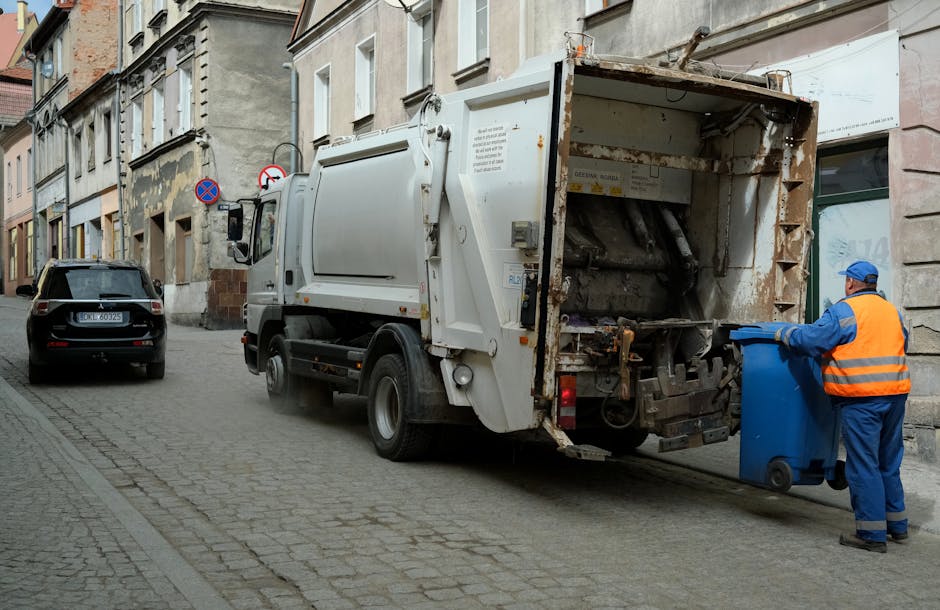
Rubbish removal sounds straightforward until the van can't quite get where it needs to go. On Hoddesdon streets, that is often the real headache: narrow roads, tight turns, parked cars, awkward access at the rear of properties, and the simple fact that not every collection point is designed with clearance in mind. If you are dealing with rubbish removal access issues on Hoddesdon streets, this guide breaks down what typically causes the problem, how professionals work around it, and what you can do to make the job safer, quicker, and less stressful.
Truth be told, most access problems are solvable with a bit of planning. The trick is knowing what to check before the team arrives, what to tell them in advance, and when a standard collection needs a different approach. That is what this article is here to help with.
- Why it matters
- How the process works
- Key benefits
- Who it is for
- Step-by-step guidance
- Expert tips
- Common mistakes
- Tools and resources
- Law, compliance and best practice
- Options and comparison
- Real-world example
- Practical checklist
- Conclusion
- Frequently asked questions
Why Rubbish removal access issues on Hoddesdon streets Matters
Access is not a minor detail. It is often the difference between a smooth collection and a job that drags on, costs more, or has to be rescheduled. On streets with limited parking, busier school-run periods, shared driveways, or side entrances that only just fit a wheelbarrow, every metre matters. Even a small issue, like a low branch or a neighbour's car overhanging a dropped kerb, can slow things down.
For households, landlords, tradespeople, and business owners, poor access can mean missed clearances and unnecessary stress. For the removal team, it can create manual handling risks, blocked routes, or a need to carry items a long way from the property to the vehicle. That is where planning starts to pay off.
There is also a practical local angle. Hoddesdon has a mix of residential streets, older properties, flats, and compact access routes, so a one-size-fits-all approach usually falls flat. To be fair, that is true of plenty of towns, but in tighter streets it becomes obvious very quickly. What looks like a quick job from the pavement may take a little more thought once you are standing there with a sofa, a bag of builders' rubble, or a stack of damp garden waste that smells a bit stronger than expected.
Expert summary: access issues rarely stop rubbish removal entirely, but they do affect timing, safety, pricing, and the method used. The best results come from clear communication before the team arrives.
How Rubbish removal access issues on Hoddesdon streets Works
The process usually starts before any lifting begins. A decent operator will want to know what type of waste needs removing, where it is located, how far it has to be carried, and whether a vehicle can park near the load. That sounds basic, but it is the kind of information that prevents awkward surprises.
In practice, access is assessed in layers:
- Street access: Can a van stop nearby without causing an obstruction?
- Property access: Is there a front path, side gate, alleyway, communal entrance, lift, or stairwell involved?
- Item access: Are the items in a loft, garage, cellar, rear garden, or upper-floor flat?
- Handling access: Can items be moved safely without damaging walls, bannisters, doors, or flooring?
If the answer to one of those is "not easily", then the job may need extra labour, a smaller vehicle, a split load, or a staggered collection plan. None of that is unusual. In fact, it is fairly normal on narrower streets and older residential layouts.
Professional rubbish removal teams often adapt by using smaller vehicles, more than one crew member, protective equipment, or timed arrival windows that avoid peak parking pressure. Sometimes they will also ask you to move cars, clear the path, or unlock gates before they arrive. It saves time, and let's face it, no one wants a van idling while everyone searches for keys.
If the waste is part of a wider property clearance, the approach may overlap with house clearance services, home clearance support, or a more specific job such as flat clearance. For larger mixed loads, waste removal may be the most direct option.
Key Benefits and Practical Advantages
Dealing with access issues properly is not just about avoiding problems. It can actually improve the whole clearance experience.
- Less delay: Clear access information helps the crew plan the right vehicle and arrival time.
- Better safety: Fewer unnecessary trips mean lower manual handling risk.
- Cleaner finish: You are less likely to end up with scuffed walls, broken fittings, or rubbish left in awkward spots.
- More accurate pricing: The team can estimate labour and vehicle needs more realistically.
- Less neighbour friction: A tidy, coordinated collection usually causes less disruption on narrow streets.
There is another benefit that people often overlook: peace of mind. When access is organised well, you do not spend the morning second-guessing whether the van can turn in, whether the sofa will fit through the stairwell, or whether the recycling bags have to be carried across three gardens. That mental load matters more than people admit.
If you have mixed items, such as old furniture, a broken appliance, and some garden waste, it may help to look at dedicated services like furniture clearance, garden clearance, or garage clearance. Choosing the right kind of removal can reduce unnecessary carrying and make access planning much easier.
Who This Is For and When It Makes Sense
This topic matters to a lot of different people, not just homeowners with a full hallway. If you are in any of the situations below, access planning is worth thinking about early.
- Homeowners clearing bulky items from a house, loft, garden, or garage.
- Flat residents dealing with narrow stairs, communal corridors, or limited lift access.
- Landlords and letting agents preparing a property between tenancies.
- Tradespeople and builders needing builders' waste clearance after work in a tight residential street.
- Business owners arranging office or stock removal with loading restrictions.
- Older residents or families who want the job done with minimal disruption and strain.
It makes sense any time access is not obvious. That might be a terraced house with no driveway, a shop unit with rear-entry limitations, or a property where the rubbish is stored in a loft with a steep staircase. It can even be as simple as a front path with planters and bins that narrow the route more than you first realise.
For some people, the right answer is not a bigger team; it is a different service model. If the issue is a workplace clearance, for example, office clearance may be a better fit than a general load-by-load approach. Similarly, businesses with regular waste needs may benefit from business waste removal rather than one-off ad hoc collections.
Step-by-Step Guidance
If you want to avoid access headaches, this is the part to focus on. A little preparation goes a long way.
- Walk the route first. Start at the street and follow the exact path to the waste. Check gates, steps, slopes, tight corners, low ceilings, and any places where two people cannot comfortably pass.
- Measure the awkward bits. You do not need engineering precision. Rough measurements of gate widths, stair turns, and loft hatches are usually enough to flag a potential issue.
- Identify parking options. Note whether a vehicle can stop close by, whether the street is often full, and whether there are time-based restrictions or resident-only bays.
- Separate the waste types. Furniture, general rubbish, garden waste, and construction waste may need different handling. Sorting early helps the crew plan the load.
- Clear the route. Move bikes, bins, washing lines, plant pots, fragile ornaments, and anything else that could slow the carry-out.
- Flag hazards. Mention broken glass, damp waste, needles, heavy masonry, unstable stacks, or anything that could create a risk. Better to over-communicate than underdo it.
- Confirm the collection method. Ask whether the crew can collect from inside, from the kerb, from the rear, or only from a vehicle-accessible point.
- Check the final tidy-up. Make sure you know what is included: sweep-up, loading, segregating recyclable material, and disposal route.
A small real-world tip: if your street gets busy around school pick-up time or the early evening commute, avoid scheduling then if you can. It sounds obvious, but those twenty minutes can make parking much harder than expected. One small gap vanishes, and suddenly everyone is circling.
If you are unsure about what access will allow, ask for a service that is used to tight spaces and varied property layouts. If you are comparing options, take a look at furniture disposal for bulky items that need careful handling, or explore loft clearance if the main challenge is vertical access rather than street access.
Expert Tips for Better Results
Experience tells you a lot of access problems are predictable. The good news is, the fixes are simple.
- Send photos before the visit. A few clear pictures of the entrance, stairs, parking space, and waste pile can save a surprising amount of time.
- Be honest about weight and volume. A "few bags" can turn into a small mountain once you open the shed. Happens all the time.
- Protect surfaces first. If the team is carrying items through a hallway or stairwell, lay down temporary protection where needed.
- Keep neighbours in the loop. On close-knit streets, a quick heads-up about lorries, loading, or temporary obstruction can avoid awkward conversations.
- Plan for a backup approach. If the main access route is blocked, ask what the next option is. Rear gate? Smaller vehicle? Split load?
- Group like with like. Keeping metal, wood, furniture, and mixed rubbish separate can speed up loading and improve recycling outcomes.
One of the most useful habits is to think like the crew for a minute. Where would they trip? Where would they struggle to turn? Which item will be the one that only just fits through the door and then suddenly doesn't? That mental rehearsal sounds fussy, but it works.
If you care about recycling and responsible disposal, it is also worth checking how the company handles sorting and recovery. A provider that explains its approach clearly, such as on a recycling and sustainability page, usually gives you a better sense of how loads are processed rather than simply tipped and forgotten about.
Common Mistakes to Avoid
Most access-related problems are preventable. These are the mistakes that come up again and again.
- Assuming the vehicle can park right outside. Streets may look fine at midday and be packed twenty minutes later.
- Forgetting about height restrictions. Low branches, canopies, and awkward overhead lines can matter as much as width.
- Underestimating stairwells and landings. A sofa can turn out to be the wrong shape long before it reaches the front door.
- Not mentioning long carry distances. Even a few extra minutes of carrying can affect labour and timing.
- Leaving everything until the last minute. That is how small access issues become big ones.
- Mixing hazardous items in with general rubbish. If there is anything sharp, chemical, or unstable, it needs to be identified early.
One more: do not hide the awkward bits. If the only way to access the waste is through a narrow alley with a loose paving stone and a bend at the end, say so. It is much better to be upfront than to force the crew into an improvised solution they were not expecting.
Tools, Resources and Recommendations
You do not need specialist kit for every job, but a few simple tools and sensible preparations can make a huge difference.
| Tool or resource | Why it helps | Best used for |
|---|---|---|
| Measuring tape | Checks gate widths, stair turns, loft hatches, and door openings | Bulky furniture, loft access, tight corridors |
| Phone camera | Shows access points, parking, hazards, and waste volume clearly | Quotes, planning, difficult entrances |
| Heavy-duty gloves | Helps with rough or awkward items before collection | Garden waste, broken items, dusty loft clearances |
| Clear labels or notes | Makes it easier to separate what goes and what stays | Mixed household or business clearances |
| Temporary floor protection | Reduces scuffs and mess through hallways or communal areas | Flats, terraces, internal moves |
As a practical recommendation, use a simple site note for yourself: access route, parking, key collection point, waste location, hazards, and anything that must not be touched. A few lines on paper or in your phone is enough. Nothing fancy. Just clear.
If you are pricing up a job, checking pricing and quotes information can help you understand what factors usually influence the final figure. That is especially useful when access is the variable that may change labour time or vehicle choice.
Law, Compliance, Standards, or Best Practice
Waste removal in the UK is not something to treat casually. While this article is not legal advice, there are a few sensible principles that apply to access-heavy jobs.
First, waste should be handled and transported responsibly by whoever takes it away. That means the operator should have suitable processes in place for sorting, transport, and disposal. Secondly, access arrangements must not create avoidable danger for residents, crews, or the public. Blocking pavements, damaging property, or moving heavy waste unsafely is not just bad practice; it is exactly the kind of thing that causes avoidable trouble.
On tight streets, good practice usually includes:
- planning the collection time to minimise disruption,
- using the safest carrying route available,
- protecting surfaces where necessary,
- keeping the loading area as clear as possible,
- separating materials that may need different handling,
- and communicating clearly about any access limits.
If your job involves builders' rubble, sharp offcuts, or heavy waste, the risk profile rises a little. That is where a provider with clear health and safety guidance and visible insurance and safety information is reassuring. It does not solve the access issue on its own, of course, but it helps you know the job is being handled with a proper level of care.
For businesses, there is also a reputational angle. A badly managed clearance on a busy street can block customers, upset neighbours, and create an avoidable mess outside premises. A tidy, well-briefed removal looks better. Simple as that.
Options, Methods, or Comparison Table
When access is awkward, there are usually several ways to get the job done. The best choice depends on location, volume, and how much carrying is involved.
| Method | Best for | Pros | Trade-offs |
|---|---|---|---|
| Kerbside collection | Items already near the street | Fast and simple if parking is easy | Not suitable if items must be carried far |
| Inside pickup | Homes, flats, lofts, garages | Less lifting for the customer, more complete service | Needs good route planning and may take longer |
| Rear access collection | Terraced houses, gardens, alleyways | Can avoid front-street congestion | Rear routes can be narrow or obstructed |
| Small-vehicle access | Tight residential streets | Better manoeuvrability | May require more than one trip |
| Split-load clearance | Large mixed jobs with limited space | Flexible and safer in awkward properties | Can take longer overall |
If the issue is mainly domestic clutter rather than loose waste, a more tailored service may make sense. For example, furniture clearance is often better for bulky items, while garage clearance is useful where access is hidden behind storage, tools, and years of "I'll sort that later".
Case Study or Real-World Example
Picture a terraced house on a modest Hoddesdon street. The front path is narrow, the wheelie bin is in the way, and there is no driveway. Inside, the waste is a mix of an old wardrobe, several bags of household rubbish, and a few heavy items stored in the rear shed. Nothing dramatic. Just a typical job with a few access wrinkles.
In that kind of situation, the smart approach is usually to:
- move the bin and any bikes before the team arrives,
- open rear access if available,
- identify the heaviest item first,
- clear the hallway,
- and confirm where the vehicle can stop without blocking traffic.
What happens next is rarely glamorous. The crew will test the route, carry the load in a sensible order, and likely spend more time protecting door frames than the customer first expected. But that is the point: careful handling saves headaches later. Nobody wants a scrape on a new banister because the route was guessed rather than checked.
On another job, a small office unit with rear loading restrictions might need evening collection, a narrower vehicle, and a staggered removal so that staff can keep working during the day. The details change, but the principle stays the same: access decides method.
Practical Checklist
Use this before collection day. It is simple, and honestly, it saves a lot of faff.
- Have I checked the exact route from waste to vehicle?
- Can a vehicle stop close enough to the property?
- Are there low branches, narrow gates, stairs, or tight turns?
- Have I removed cars, bins, bikes, and other obstructions?
- Have I told the provider about heavy, sharp, or awkward items?
- Do I know whether items are being collected from inside, kerbside, or rear access?
- Have I separated furniture, general rubbish, and recyclable material where possible?
- Do I know which items must stay?
- Have I planned around busy street times if parking is limited?
- Have I asked about tidy-up and disposal expectations?
If you can tick most of those off, you are usually in good shape.
Get a free quote today and see how much you can save.
Conclusion
Rubbish removal access issues on Hoddesdon streets are common enough that they should be planned for, not feared. The right approach is usually a blend of honest information, a quick look at the route, and a removal method that fits the property rather than fighting it.
Whether you are clearing a flat, a family home, a garage, or a small business unit, access will shape the job. Once you accept that, everything becomes easier. The collection is smoother, the team is safer, the load moves faster, and you avoid that awful moment when everyone stands in the hallway wondering how on earth a wardrobe got this far in the first place.
Good planning makes a messy job feel manageable. That is the real win.
Frequently Asked Questions
What are the most common rubbish removal access issues on Hoddesdon streets?
The most common issues are narrow roads, limited parking, blocked pavements, tight front paths, rear access problems, and awkward stairwells. Older layouts and terraced streets can make bulky collections a bit more involved than they first look.
Do I need to measure my gate or stairwell before booking?
It helps, yes. You do not need exact engineering measurements, but rough widths for gates, doors, stair turns, and loft hatches can stop a nasty surprise on collection day.
Can rubbish be collected from inside my property if access is tight?
Usually, yes, if the route is safe and practical. Inside collection is common for houses, flats, lofts, garages, and offices, although extra carrying distance may affect timing and cost.
What should I tell the clearance team before they arrive?
Tell them where the waste is, how it is accessed, whether there is parking nearby, and if anything is especially heavy, sharp, damp, or difficult to move. Photos are very useful too.
Will access problems make the job more expensive?
They can, because difficult access may require extra labour, more time, or a different vehicle. The exact impact depends on the property and the load, so it is best to ask for a clear quote based on the real access conditions.
What if my street is usually full of parked cars?
That is very common. If possible, book at a quieter time of day and let the provider know about parking pressure in advance. Sometimes a smaller vehicle or a slightly different arrival window helps a lot.
Can a clearance team use the rear of my property instead of the front?
Often they can, provided the route is safe and clear. Rear access is common for terraced homes and gardens, but it needs to be checked for width, locks, steps, and obstructions.
What types of waste are hardest to remove on restricted access streets?
Bulky furniture, builders' rubble, heavy garden waste, and awkward mixed loads are usually the most challenging. Loft items can also be tricky if the staircase is tight or the hatch is small.
How can I make the collection faster?
Clear the route, move obstructions, separate waste types where possible, and make sure the crew knows exactly what they are collecting. A tidy route saves time every single time, more or less.
Is it better to choose a specialist service for flats or offices?
Often, yes. Flat clearance and office clearance are usually better suited to buildings with stairwells, communal entrances, or loading constraints than a generic collection approach.
What if the waste turns out to be harder to access than expected?
That happens. A good operator will reassess the route, discuss the options, and adapt the collection method where possible. The key is not to hide the problem before the team arrives.
Where can I find more information about company policies and trust points?
It is worth reviewing pages such as about the company, insurance and safety, and terms and conditions. They can help you understand how the service is run and what to expect.
How do I know whether my clearance needs a general waste or a furniture-specific service?
If most of the load is bulky household items, furniture-specific help may be more efficient. If the load is mixed, general waste removal may suit better. The right choice depends on what you are actually clearing, not just the label.
Who should I contact if I want to ask about a tricky access job?
If the job is complicated, the simplest next step is to speak directly through the contact page. A clear description of the route, parking, and waste type will usually get you a more useful response than a vague request ever would.